New Building Materials That Will Evolve Construction For The Future
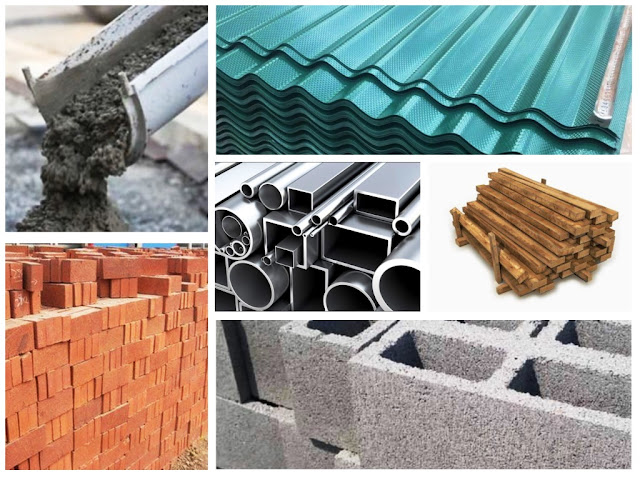
Large numbers of Building Materials have been used by many builders for years. However, the construction business uses a ton of land and assets and, as such, is putting great efforts to make innovative materials that can revolutionize the whole business. We've seen the construction business go through a progression of building material advancements all through the ages. Whenever we talk about building materials, we refer to each component used for construction purposes. Back in the prehistoric period, civilizations experienced a change from wood to stone that considered the formation of more robust and sturdy constructions. Some are even sustaining today as incredibly famous attractions.
Construction organizations need to be up-to-date on these material advancements to keep an upper hand. Buildings created with the most Modern Construction Materials will be more equipped to tackle continuous hazards, reduce their carbon footprint, and affect the business. The following are some of the unique materials and how they may be applied to construction later.
New Building Materials For The Future
Pollution Retaining Bricks
With the danger of environmental change ever-present, future engineers will continually be forced to think about the carbon footprint of their designs. They can use pollution-absorbing bricks which essentially work like a vacuum and can be included in a wall with a window or part of a cooling framework, implying that it can easily be incorporated into any type of construction project.
Hardwood Cross-Overlaid Timber
Produced using layers of solid wood, cross-overlaid timber is one of the best Building Materials that has proved to be a crucial option for structures requiring sustainability and toughness. Its alternating, layered design is as strong as built-up concrete and structural steel.
3D-printed Graphene
The innovation of the New Building Material Set allows designers to understand their vision better, sustaining constructions with streamlined strength, toughness, and flexibility. Graphene, thought about as one of the most robust artificial materials on the planet, contains physical properties that have a lot of use in the construction business.
However, particularly at the early stage, the chance of using 3D-printed Graphene in construction was strengthened by a paper distributed by three MIT engineers, which mentioned a three-layered design that potentially could be multiple times as solid as steel, and 5% the heaviness of it as well, whenever worked with 3D-printed Graphene.
Aerographite
Aerographite is produced using networks of empty carbon tubes, making it multiple times lighter than Styrofoam. Stable at room temperature, it's likewise ready to conduct power, is amazingly impressive but is as yet ready to be bent into different shapes.
Conclusion
Nowadays, various Stronger and Lighter Building Materials are designed to be stronger in the climate. From materials that produce their energy to those that give more prominent structural protection, the future of construction is evolving. While large numbers of these developments are not yet acknowledged on full-scale structures, they might be advancing into your projects inside the following couple of many years. Up to that point, remaining on-trend will assist you to work on your bottom line and play your part in keeping our current circumstances.
Comments
Post a Comment